FOOD
Top Tips for Rabbit Nutrition
Many of the health problems seen in rabbits could be reduced by feeding the correct diet.
Rabbits are one of the UK’s most popular pets, yet many owners have difficulty understanding their complex dietary needs. To help improve knowledge we have partnered with Burgess Pet Foods to help you provide the best nutrition advice to rabbit clients.
Estimated reading time: 1 minutes
Share the article:
Health issues associated with poor diet
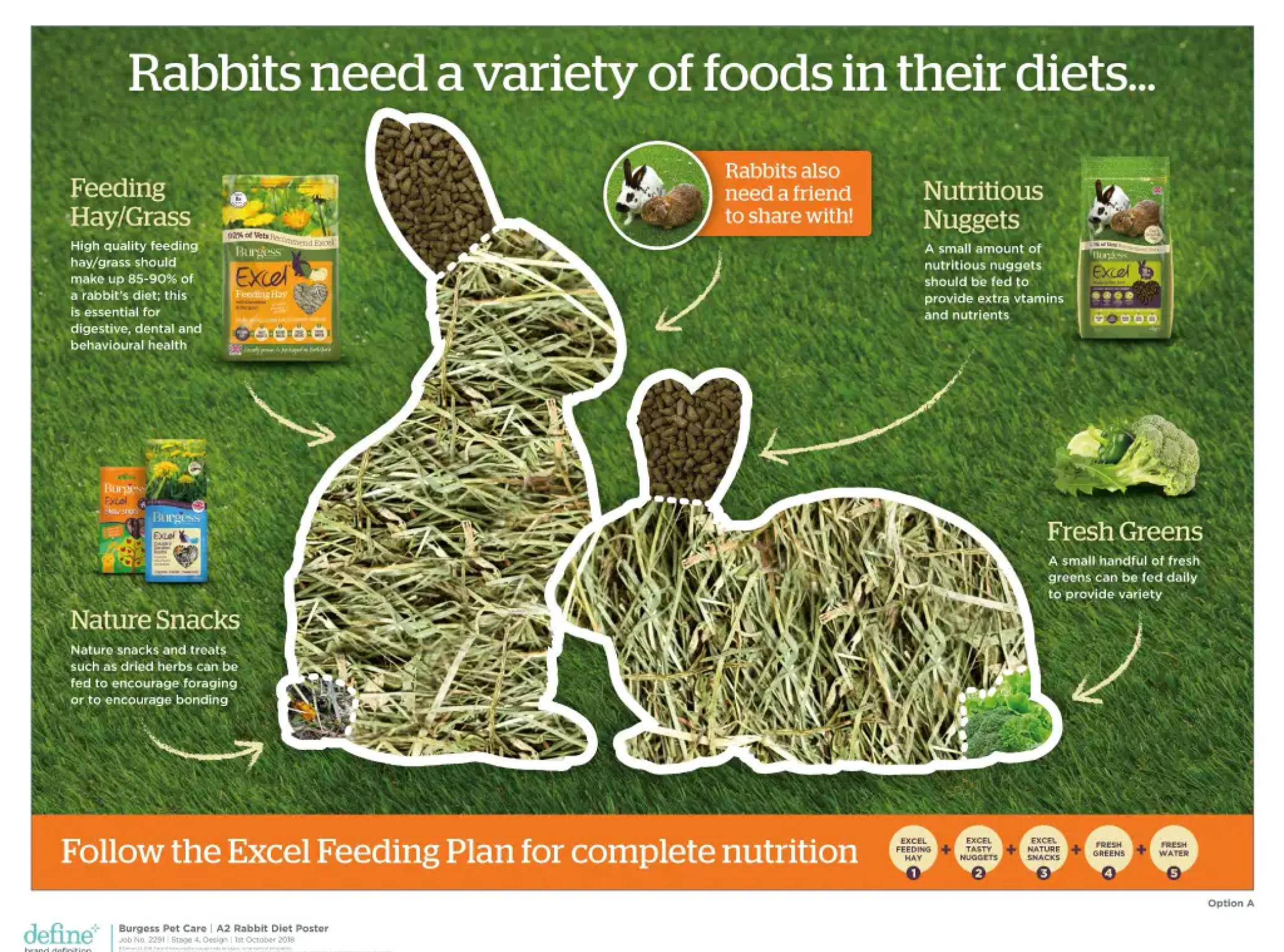
Rabbits need extremely high levels of fibre – both indigestible and digestible.
- Indigestible fibre moves through their digestive system and is excreted as round, hard droppings
- Digestible fibre is moved to an organ called the caecum where good bacteria ferment it and it is then excreted as clumps of sticky droppings. Rabbits eat the sticky droppings and essential nutrients are absorbed. This is why the diet should be 85-90% hay.
Muesli-style diets are particularly problematic, and best avoided. However, it is estimated that 25% of UK rabbits are still fed muesli due to its low cost and visual appeal. Feeding this type of food can cause rabbits to selectively feed as they tend to pick out the higher sugar and starch elements of the diet. This in turn can reduce hay and water intake which can lead to serious health problems including:
- Obesity
- Dental issues
- Behavioural problems
- Fly strike
- Gut stasis
Common health problems associated with a lack of fibre and muesli diets are:
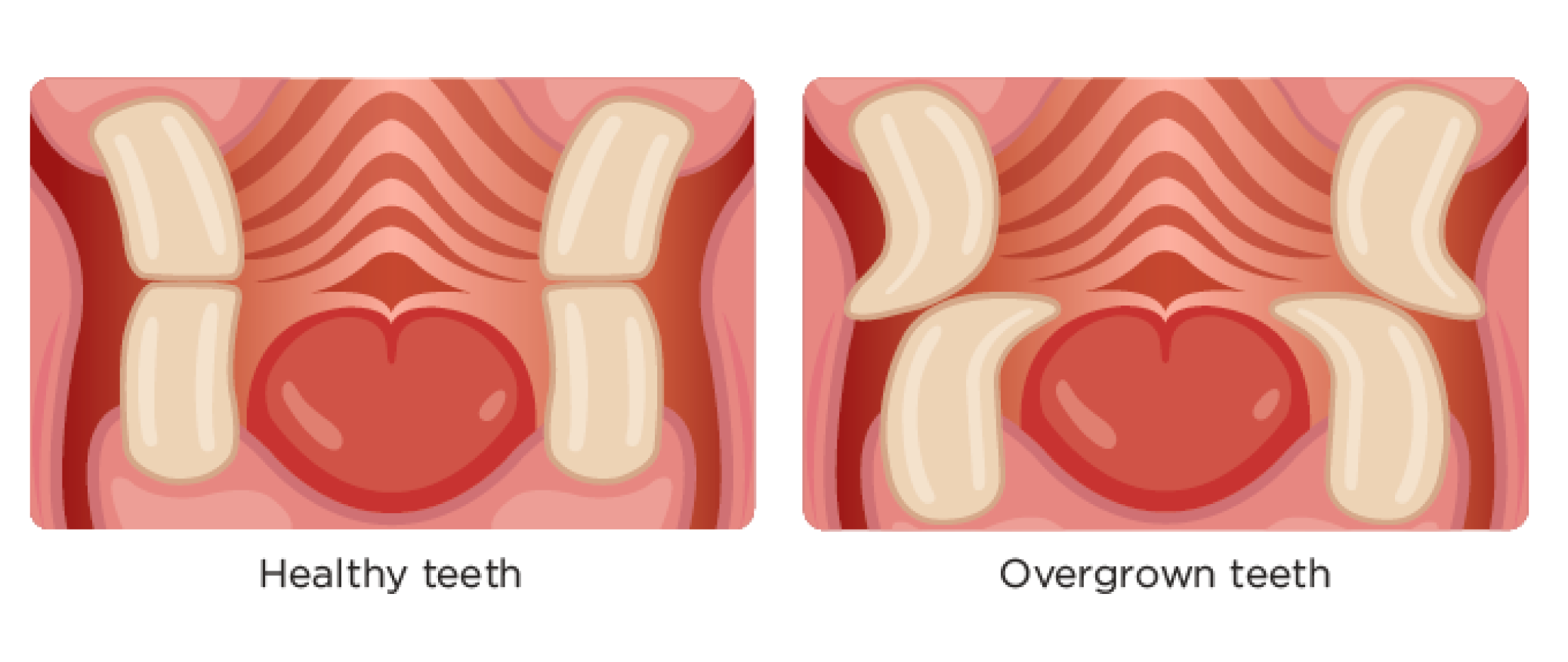
Dental Problems
Abrasive foods such as hay help to wear rabbits’ teeth down, if they do not get enough their teeth may become overgrown causing pain. Overgrown teeth mean that a rabbit will struggle to eat properly which can cause serious digestive issues.
Fly strike
Fly strike happens when flies lay their eggs in the rabbit’s soiled fur, the eggs then hatch and the maggots chew into the rabbit’s skin. The risk of fly strike may be increased by selective feeding of muesli-style diets which has been shown to increase the number of uneaten sticky droppings which can attract flies.
Gut stasis
Rabbits need high levels of fibre to keep their digestive system moving. A condition called gut stasis can occur when the digestive system slows down or stops leading to a build-up of gas and toxins which can be fatal. This may happen when a rabbit is not getting enough fibre in their diet.
Selective feeding of a muesli-style diet has been shown to reduce the faecal output in rabbits, which is associated with an increased risk of gut stasis.
Obesity
Rabbits kept as pets are less active than those in the wild so are at risk of obesity if the correct diet isn’t fed and they don’t get enough exercise. The bulk of a rabbit’s diet should be high quality feeding hay or fresh grass, and nuggets should be fed according to on pack feeding guidelines to avoid over feeding.
Muesli-style diets have been found to increase the risk of obesity as rabbits tend to favour the carbohydrates and fats found in the food over the high fibre pellets resulting in a reduced hay intake.
Behavioural issues
In the wild rabbits spend most of their time foraging which is why a constant supply of hay and grass is necessary to allow them to express normal behaviour.
Feeding fruits, vegetables and plants
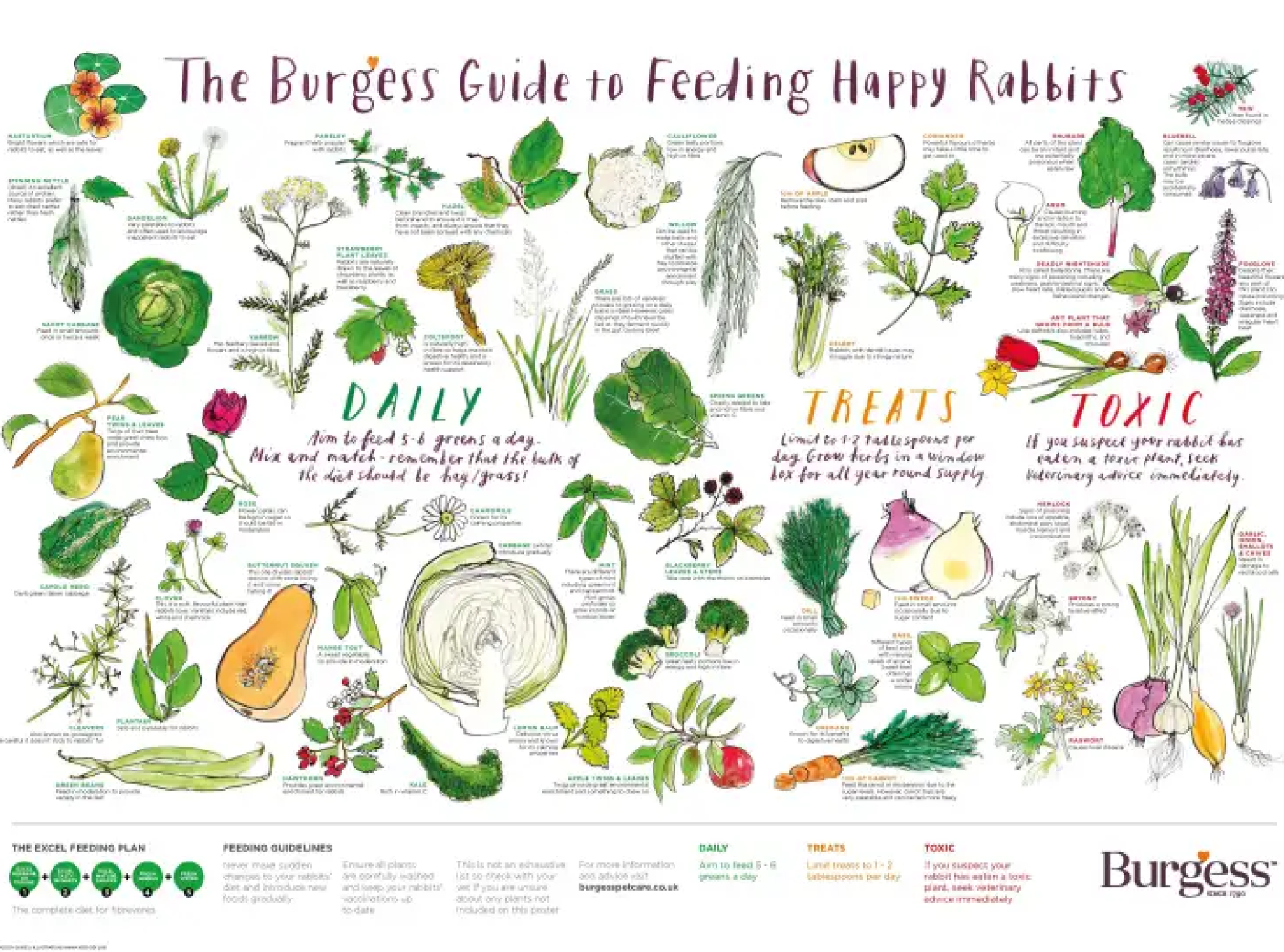
Never feed the following foods
Apple pips, avocado, potato, potato tops, rhubarb (leaves and stalks), tomato leaves, locust tree pods and dried seed pods, any plant that grows from a bulb, bluebell, yew, foxglove, garlic, onion, shallots, chives, hemlock, buttercup, dock, ivy, poppy, privet, primrose, ragwort.
Occasional treats
Apple (pipless), banana, savoy cabbage, turnip, carrot, swede, spinach, parsley, basil, dill, oregano, coriander.
Looking for a vet?
Your vet plays a big role in your pet’s health. Enter your location and get a list of vets near you.
Featured by category
Receive Pet Care Tips & More!
Join MyPet.com for products, promotions & expert pet care tips to help keep your pet happy and healthy.