Health
Hyperthyroidism and your cat
If you have a cat, you may not hear about feline hyperthyroidism until they reach middle age. Discover everything about hyperthyroidism and cats here.
Share the article:
When you have a kitty, you may not hear anything about feline hyperthyroidism at wellness-visit check-ups, until your feline friend reaches middle age or older. That’s because feline hyperthyroidism is the number one endocrine disorder in older cats. In fact, hyperthyroidism is so common in older cats that many wellness guidelines recommend screening for this disorder once a cat turns seven years old. But what exactly is hyperthyroidism? And what signs should we, as cat families, be on the lookout for so that we can catch hyperthyroidism in its early stages? Experts tell us that early detection is the key to successfully managing this disease and maintaining our cats’ overall health, so what’s important for us to know?
WHAT IS THE THYROID?
The thyroid is a gland that produces thyroid hormones like thyroxine. It is divided into two lobes located on either side of the windpipe in your cat’s neck and in cats without hyperthyroidism, it cannot be felt. However, in cats with hyperthyroidism, an enlarged thyroid gland is sometimes visible, but more often can be felt.
Thyroid hormones are essential for many functions in your cat including normal growth of the skeleton and brain in young animals. In cats of all ages, it also has an array of important functions including:
- Regulation of metabolism – basal metabolic rate, fat mobilisation, and carbohydrate metabolism
- Regulation of the cardiovascular system – heart rate and ability of the heart to pump
- Mental state
WHAT IS HYPERTHYROIDISM?
Hyperthyroidism occurs when there are abnormal changes to the thyroid gland, causing the thyroid to make and secrete very high levels of thyroid hormones. This occurs more frequently in older cats.
Thyroid hormones control the speed of your cat’s metabolism and when in excess, can cause a range of signs. The more thyroid hormone that is produced, the higher the metabolic rate, and the more calories your cat burns. It is a progressive disease with a slow, subtle onset, becoming more obvious with time.
Hyperthyroidism can affect both male and female cats equally however, Siamese, and Himalayan cats appear to have a reduced risk of developing this disease.
WHAT ARE THE SIGNS OF HYPERTHYROIDISM?
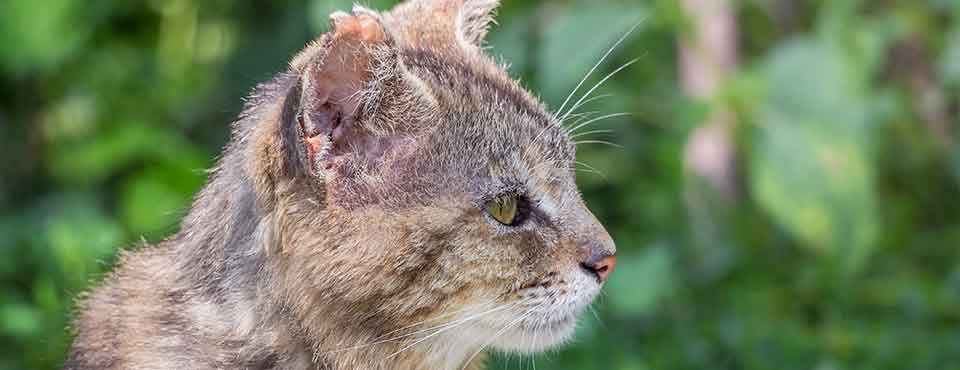
Early signs of hyperthyroidism may be hard to recognise. Some signs, including weight loss and high levels of activity (hyperactivity), are common but are not always recognised as abnormal. The gradual deterioration in body and coat condition can also be wrongly attributed to the “normal signs” of aging. Hyperthyroid cats might also be nervous or aggressive.
Signs of hyperthyroidism may include:
- Weight loss (with or without a good appetite)
- Increased appetite (in some cats appetite is decreased)
- Poor body condition (including appearance of the coat and skin)
- Palpable thyroid nodule in the neck
- Rapid heart rate
- Hyperactivity, nervousness, stress, difficulty to handle
- Increased thirst and urination
HOW IS HYPERTHYROIDISM DIAGNOSED?
Your vet will diagnose your cat’s hyperthyroidism from the history that you provide, a thorough physical examination, and laboratory tests. Conditions such as kidney disease and heart problems are also common in older cats so it is important to check for concurrent diseases which can influence the choice of treatment and prognosis for your cat. To confirm the diagnosis of hyperthyroidism your vet will take blood samples to measure the levels of thyroxine circulating in the bloodstream and to evaluate your cat’s general condition to make sure he or she is not suffering from any other diseases. In some cases, even though your vet strongly suspects that your cat is hyperthyroid, the tests may not be conclusive.
This can be caused by a variety of factors:
- Your cat may be at a very early stage of the disease
- Thyroid hormone levels can fluctuate and can even be normal at some points in hyperthyroid cats.
- Other diseases / medications can influence thyroid hormone levels.
Your vet may want to repeat the blood tests after a few weeks if the results are inconclusive.
In some cases, it might be necessary to carry out other additional tests as well. These tests could include:
- Special blood tests to evaluate thyroid gland function
- Diagnostic imaging (e.g. nuclear scintigraphy, ultrasound) of the thyroid, particularly before carrying out corrective surgery.
IF MY CAT IS HYPERTHYROID, WHAT ARE THE TREATMENT OPTIONS?
There are different types of treatments that are used for the long-term management of hyperthyroidism in cats. Drugs that block the production of thyroid hormones are used to reduce the levels of these hormones back to normal. This resolves the signs of hyperthyroidism and restores your cat to his or her old self. These drugs commonly come in pill or liquid form and there are specific ways to administer this medication to your cat and due to the nature of this medication, it has to be handled with care. Your vet will advise you on how to handle your cat’s medication for your own and your cat’s safety.
Surgical thyroidectomy involves the removal of one or both lobes of the thyroid gland. Cats usually undergo 2-4 weeks of medical treatment to improve their condition and minimise the potential complications associated with anaesthesia, for example, due to heart irregularities. Surgery is curative in many cases, but hyperthyroidism can recur if there is thyroid tissue at other sites in the body (ectopic tissue). Your vet will discuss with you whether your cat is a good candidate for surgical thyroidectomy.
Iodine is necessary for the proper functioning of the thyroid gland and the production of thyroid hormones. Dietary iodine restriction may be an option for cats that can be fed this type of diet exclusively. This can be a particular challenge in multi-cat or multi-pet households. It takes longer for cats managed on an iodine-restricted diet to improve levels of thyroid hormone and these cats also tend not to gain weight as well as cats managed using other therapies.
Radioactive iodine therapy (often called I-131) is widely considered the gold-standard treatment for hyperthyroidism in cats because it offers a true cure. This is a non-invasive treatment which involves a simple injection. The radioactive iodine travels straight to the thyroid gland to destroy only the overactive cells, leaving the rest of the cat’s healthy tissue completely unharmed. In the vast majority of cases, it permanently restores normal thyroid function.
Because this treatment involves regulated radioactive material, it must be performed at accredited specialist veterinary facilities with dedicated radiation facilities. Following the injection, the cat will need to stay in a protective isolation unit at the clinic—typically for a few days to a couple of weeks—until the radiation naturally leaves their body.
Hyperthyroidism is usually manageable and there is a good chance that your cat will return to normal. Treatment aims to reduce the level and ultimately the effects of excessive thyroid hormone. Cats diagnosed with hyperthyroidism must be treated as soon as possible. The longer a cat is left untreated the more detrimental the effects of the excessive thyroid hormones.
Your vet will discuss your pet’s treatment plan with you and together you can decide on the best option for your cat
Looking for a vet?
Your vet plays a big role in your pet’s health. Enter your location and get a list of vets near you.
Featured by category
How does changing weather affect your pet?
Weather can affect your pet more than you realise. And as it becomes more extreme, we need to pay close attention to its risks, and how to overcome them.
How do external parasites threaten our pet’s health?
What are these parasites that live on our pets, why are they potentially such a menace to pet health – and what can we do to stop them?
What you should know about feline leukaemia virus
Feline leukaemia virus is an important cause of severe and often fatal disease in cats. If you want to know more about this virus, read more!
Keep Your Indoor Cat Safe in Your Home
Your home should be a safe environment for your cat, who could find real dangers in the most unlikely spots. Keep your indoor cat safe!
Vaccines 101: what dog vaccinations really do for your dog (and you)
Dog Vaccinations Guide | Learn about the types of vaccinations and when your dog needs them.
Get the facts: diabetes signs and symptoms in dogs and cats
The signs and symptoms of pet diabetes may be subtle. Read how to detect, treat and monitor diabetes in dogs and cats!
Receive Pet Care Tips & More!
Join MyPet.com for products, promotions & expert pet care tips to help keep your pet happy and healthy.