Common Horse Dental Problems
Many horses will suffer silently from dental disease so it is important to have regular check-ups (once or twice per year) to ensure their mouth is healthy.
Types of horse dental issues
In an adult horse, where all of the teeth have erupted, several common problems can develop.
Horses naturally chew their food in an elliptical fashion, with the ‘grinding’ part of the cycle occurring during the sideways movement of the jaw. In the wild, when chewing forage, the extent of the sideways motion (lateral excursion) is large, covering the whole of the grinding surface of the teeth, including the edges.
In domesticated horses this sideways movement can be reduced, and the horse doesn’t tend to grind right to the edges of the teeth every time. The central tooth surface can therefore get worn away quicker than the edges, which then become long and sharp.
Some problems that are regularly seen are:
- Abnormal wear with sharp enamel edges on both the lower and upper cheek teeth. If pronounced this can cause painful ulcers and erosions of the soft tissues of the cheek or tongue
- Overgrowth is either secondary to a misaligned jaw (parrot mouth) or as a result of a missing tooth
- Fractured, displaced, loose or missing cheek teeth
- Diastema (gaps between the teeth where food collects) causing gum disease
- Caries: tooth decay
- Tooth root abscess
- Retained deciduous (baby) teeth
- Blind (unerrupted) or abnormally large or displaced wolf teeth
- Abnormalities of the incisors
What are the signs?
- Halitosis (bad smelling breath)
- Quidding (dropping partially chewed food particularly over the stable door or around the feed bucket)
- Reduced appetite/difficulty eating/slow eating
- Food packing within cheeks
- Poorly digested food in droppings
- Weight loss
- Difficulties when ridden, such as unsteady head carriage.
- Unilateral (one sided) nasal discharge
What sort of problems can be relieved?
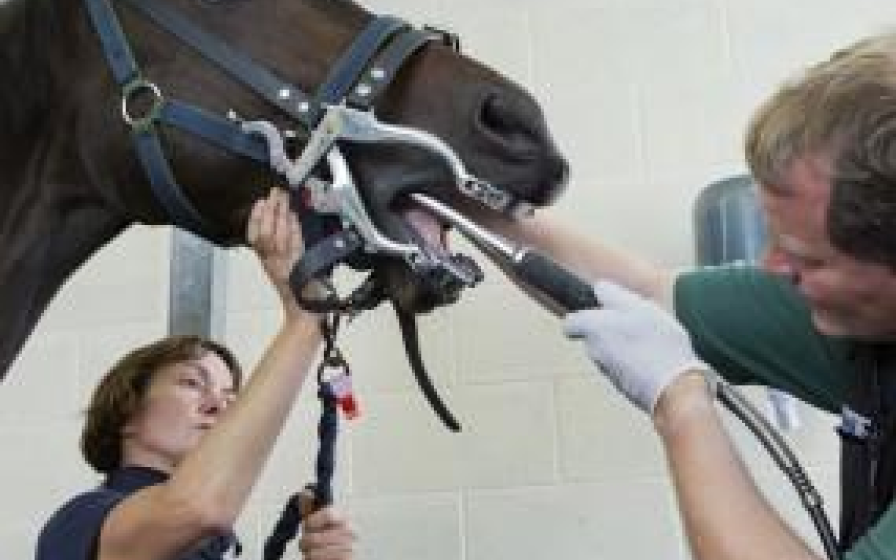
One horse dental problem can sometimes lead to others and can be more difficult to correct if not detected or treated early.
Problems may need to be treated over a period of time rather than at one examination. For example a large overgrowth will need to be reduced in stages to avoid the sensitive structures within the horse’s tooth from becoming exposed.
You can help your horse by providing at least half of their diet as good quality long fibre. If you have an older horse, they may require special attention with their diet, especially if they are missing teeth and struggle to chew long fibre. Fibre replacements offer a good solution in such cases, but again, speak to your vet with any concerns or to an equine nutritionist for feeding advice.