Horse Worming Programmes
Tailored horse worming programmes ensure specific worms are targeted with an effective product at the right time.
There are four main classes of anthelmintics (horse wormers):
1.Benzimidazoles: e.g. fenbendazole/mebendazole
2.Tetrahydropyrimidines: e.g. pyrantel embonate
3.Macrocyclic lactones: e.g. Ivermectins/avermectins
4.Praziquantel based wormers (tapeworm treatment ONLY)
Worming throughout the year
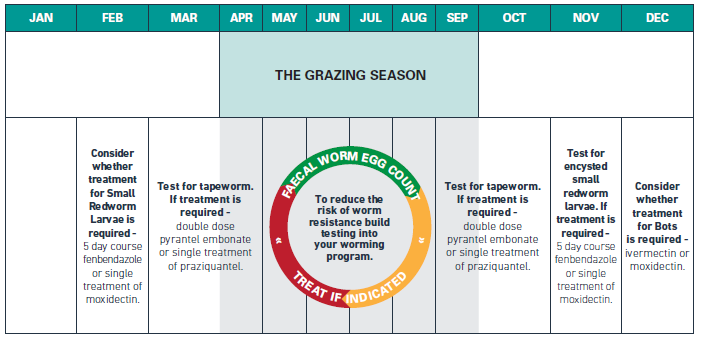
It is important that horses are tested or treated for encysted small redworm over the winter period. This is to prevent mass emergence in the spring. There are two types of wormer that can be used for this, fenbendazole or moxidectin based wormers.
Horses only need treating for tapeworm twice a year as the lifecycle takes six months to complete. This should be done in spring and autumn using a praziquantel or a pyrantel based wormer.
During the grazing season faecal worm egg counts should be performed regularly to determine whether horses need worming and if so with which wormer. Your vet/prescriber will be able to advise you on this.
It is, however, important to remember that faecal egg counts cannot detect encysted small redworms or tapeworm eggs, so it is important to treat for these parasites at certain time points during the year as previously described.
Worming a New Horse
If you have a new horse, it is sensible to worm them with a product or combination of products that will kill all types and stages of roundworm (including encysted and inhibited small redworm) and tapeworm. Stable your horse for 48 hours after worming to allow the wormer to take effect and prevent viable eggs from being deposited on the pasture.