Five Freedoms for Horse Health and Welfare
Horses are social, nomadic animals that prefer to live and move in groups over large open areas so they can flee from danger. They naturally partake in mutual grooming as a means of bonding and to develop a herd hierarchy (pecking order).
It is almost impossible to provide this type of environment for the domesticated horse but there is an Animal Welfare Act that states all animals are entitled to a minimum level of care.
The Animal Welfare Act states five freedoms that all animals are entitled to:
- Freedom from hunger and thirst: by providing enough fresh water and the right type and amount of food to keep them fit.
- Freedom from discomfort: by making sure that animals have the right type of environment, including shelter and somewhere comfortable to rest.
- Freedom from pain, injury and disease: by preventing them from getting ill or injured and by making sure animals are diagnosed and treated rapidly if they do. Animals should have access to veterinary care when needed.
- Freedom from fear and distress: by making sure their conditions and treatment avoid mental suffering.
- Freedom to behave normally: by making sure animals have enough space, proper facilities and the company of other animals of their own kind.
The text below explains how these five freedoms apply to horses.
Freedom from hunger and thirst
Horses have evolved as trickle feeders, designed to be chewing/occupied by feed for a large portion of their day (16-18 hours). Their digestive systems are primarily designed to digest fibre and, therefore, forage (hay/haylage/grass) should represent the majority of their diet.
Wild horses spend about 60 percent of their time eating. This compares to competition horses kept in individual stables where only 15 percent of their time is spent eating. Although these horses usually receive good nutrition, their eating is done over 4-5 hours; a third of the time spent by wild horses who are free to graze at will. Ideally domesticated horses should have free access to fibre to allow them to eat for at least 16 hours per day and they should always have clean drinking water.
Freedom from pain, injury and disease
It is important to make sure all reasonable steps are taken to prevent ill-health and to seek prompt veterinary care in the event of illness or injury.
A preventative health care plan should be implemented which should include worming and vaccinations. Your vet will be able to discuss an appropriate plan for your horse. To help prevent injuries, ensure that stabling and fencing is regularly inspected and any problems are repaired.
Freedom from distress and fear
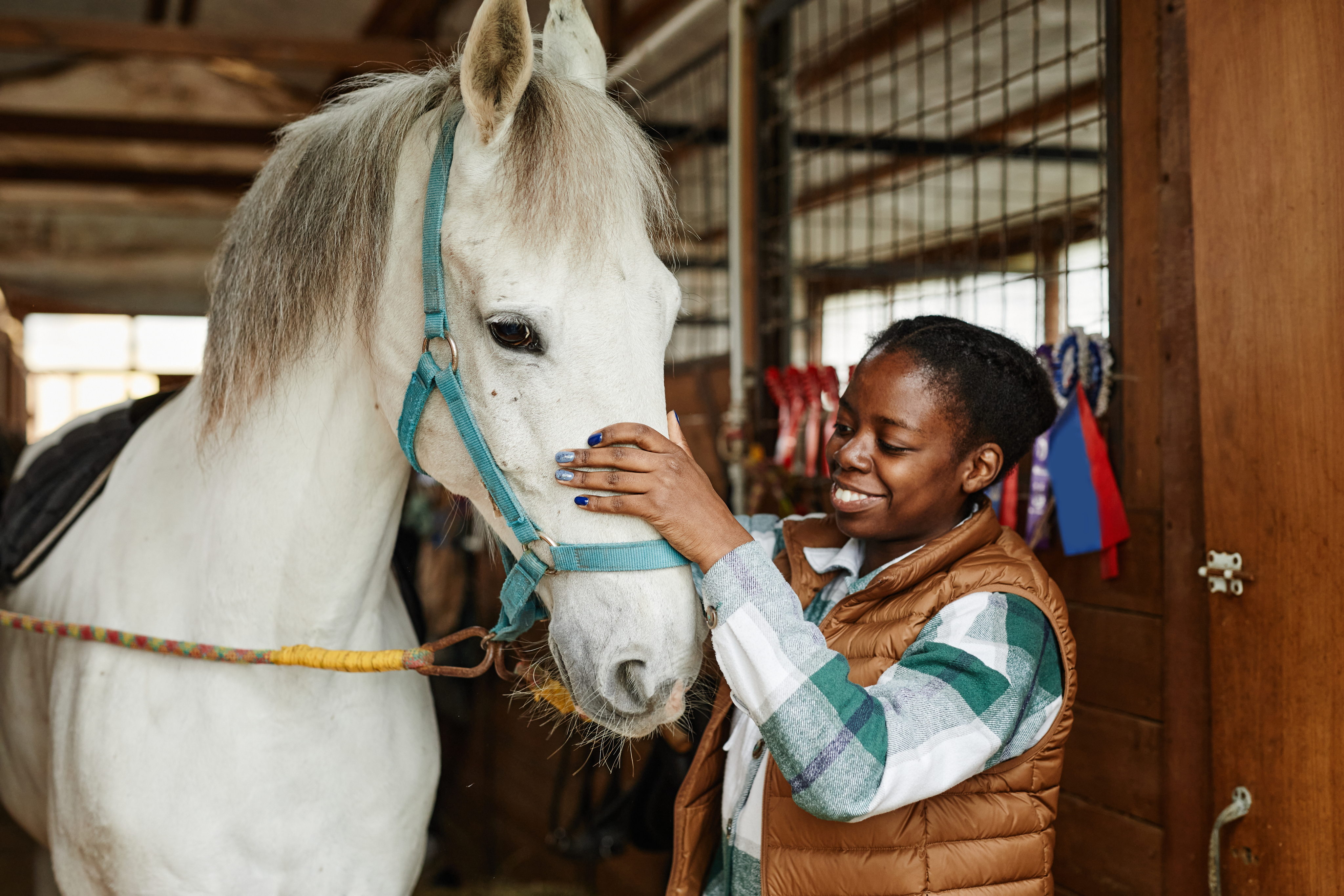
Horses are flight animals and therefore are naturally fairly nervous which can make them sensitive to handling. It is important to build up a trusting relationship with your horse.
Furthermore, horses are sociable animals and thus confining them to individual stables or paddocks may be insufficient to meet their social and mental needs. Distress may result from lack of social interaction and space. Turning horses out regularly and in groups can help to alleviate this problem.
Freedom to express natural behaviour
Chronic frustration from isolation, lack of social contact, lack of environmental enrichment and/or lack of stimulation can result in abnormal or stereotypic behaviours (‘stereotypies’). Examples of stereotypies include crib biting, weaving, wind sucking, head tossing and head nodding. Unfortunately some stereotypies become learned behaviours that cannot be resolved, even after the horse has been removed from the environment that initially triggered the behaviour (e.g. wind sucking).
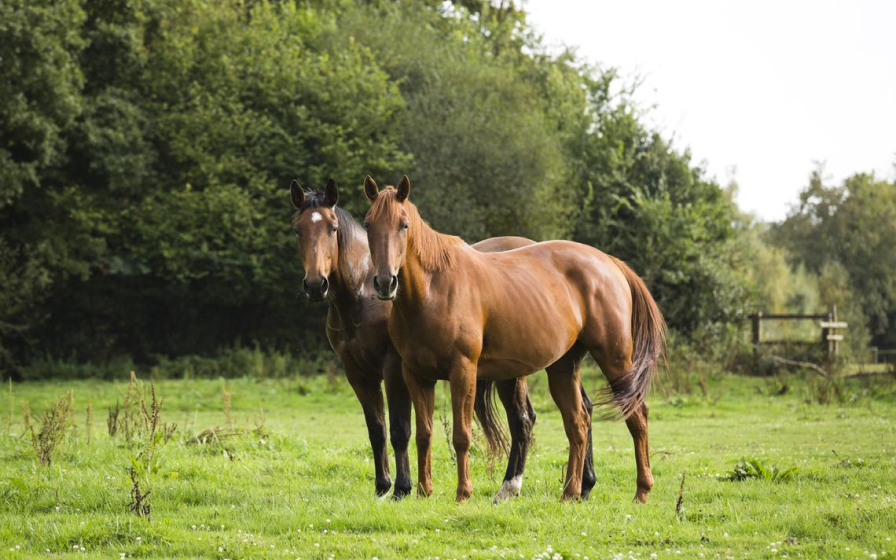
Try and make the environment as natural as possible for your horse by ensuring they have at least one friend to interact with and a field to run around in for at least some of the day. Ideally at least four hours per day should be spent out of the stable, while able to move in all gaits.