
MSD Animal Health Modern Slavery Statement 2025
Introduction
This statement is made pursuant to the reporting requirements of the United Kingdom’s Modern Slavery Act 2015 (2015 c. 30) (the “Act”). It provides information for the reporting period from January 1, 2025, to December 31, 2025.
Reporting Entities
MSD (a trading name of Merck & Co., Inc., Rahway, NJ, USA.) provides this single joint statement for itself and on behalf of its entities that are directly covered by a reporting obligation of the UK Modern Slavery Act 2015.
These reporting entities are listed in Appendix I.
Structure, Operations and Supply Chains
About MSD
We are called MSD everywhere outside of the U.S. and Canada. In the U.S. and Canada, we are known as Merck & Co., Inc., Rahway, NJ, USA. The company is listed on the New York Stock Exchange under the symbol “MRK”. MSD is a global health care company that delivers innovative health solutions through its prescription medicines, vaccines, biologic therapies, and animal health products. The company is headquartered in Rahway, NJ, USA. With over 75,000 employees, MSD operates in many regions and countries. For more information about the countries and markets around the world our products reach please see the “Access to Health” section of our Impact Report.
For more information, visit MSD UK.
About MSD Animal Health
MSD Animal Health, a division of Merck & Co., Inc., Rahway, NJ, USA., is the global animal health business unit of MSD. MSD Animal Health offers veterinarians, farmers, pet owners and governments a wide range of veterinary pharmaceuticals, vaccines and health management solutions and services. MSD Animal Health is dedicated to preserving and improving the health, well-being and performance of animals and the people who care for them. Our MSD Animal Health headquarters is located at: 126 East Lincoln Avenue, Rahway, NJ 07065 USA. MSD Animal Health operates in more than 150 countries.
For more information, visit MSD Animal Health United Kingdom.
About our Supply Chain
We operate globally, with our manufacturing facilities for human health and animal health products located in North America, South America, Europe, Africa, and Asia Pacific. Our operations rely on thousands of suppliers, including direct suppliers (such as external manufacturing providers), capital expenditure suppliers, indirect/service suppliers, and research providers to manufacture, package, and distribute these products to many markets around the world. Company subsidiaries procure goods and services from suppliers and our own operations. See Appendix II for a complete list of key supplier and service provider categories.
The largest procurement categories in fiscal year 2025 for the UK subsidiaries are service providers and research and development based in Great Britain.
Approach & Policies
Our approach to human rights is guided by internationally recognized standards. Our commitment to human rights embraces established global standards such as the Universal Declaration of Human Rights, the ILO’s Declaration on the Fundamental Principles and Rights at Work, the OECD Guidelines for Multinational Enterprises, the UN Guiding Principles on Business and Human Rights, and the UN Sustainable Development Goals, as well as the industry standard, the Pharmaceutical Supply Chain Initiatives (PSCI) Principles for Responsible Supply Chain Management. In accordance with these standards, we have integrated respect for human rights into our business practices, including our Code of Conduct, our Business Partner Code of Conduct, as well as relevant corporate level policies.
Our public commitment to upholding human rights and eradicating modern slavery in all its forms within our own operations and supply chain are described in our Public Policy Statement on Human Rights and Impact Report. The corporate policies apply to all subsidiaries, as does the above- mentioned Code of Conduct. Policies are reviewed regularly and evaluated for compliance with evolving global regulations and industry standards.
Risk of Modern Slavery
Our operations
We believe there is minimal risk of causing, contributing to or being linked to instances of modern slavery within our own operations. We do not engage in business activities that involve child labour, vulnerable, low-skilled, or unskilled labour, or migrant workers. As outlined in the section below, we take measures to address this risk within our own operations. No instances of modern slavery were identified in our operations in 2025.
The pharmaceutical industry is highly regulated and is not generally recognised as an industry that poses a significant risk of modern slavery, compared to other industries such as: textiles, construction, mining, electronics manufacturing, forestry, fishing, food processing, domestic work, hospitality, and tourism. Despite the relatively low risk, we continue to leverage our internal tools and processes to monitor risk levels and take action where needed.
Our supply chain
The risk of modern slavery within our supply chain is predominantly associated with our use of suppliers that operate in counties that are known to present a significant risk of modern slavery, such as those countries listed in Walk Free Foundation’s Global Slavery Index and The Children’s Rights in the Workplace Index.
We recognise that supply chains of companies that extend into high-risk countries potentially face a greater risk of modern slavery. We understand that the risk of modern slavery in the pharmaceutical supply chain exists; however, it may be relatively lower compared to some other industries.
We are working to address these risks and promote responsible supply chains. As outlined in the section below, we use our Business Partner Code of Conduct to communicate our expectations to suppliers, and conduct supplier due diligence and social audits to proactively evaluate and monitor risk in our supply chain. Our collaboration with industry initiatives and organizations like the Pharmaceutical Supply Chain Initiative (PSCI) and Business for Social Responsibility (BSR) also helps in driving responsible practices across the pharmaceutical sector.
No instances of modern slavery were identified in our supply chain in 2025.
Addressing Modern Slavery Risks
Our operations
During 2025, we worked to address the risks of modern slavery within our own operations through:
Code of Conduct: Respecting and abiding by our company’s core values and standards, as stated in our company Code of Conduct. Our values and standards are the foundation of our company’s success. They apply globally, wherever we are doing business.
Standards: Upholding and maintaining company standards on modern slavery and human trafficking. These are embedded in our Global Policy on Labour & Human Rights and reflected in our Public Policy Statement on Human Rights.
Employee Engagement: Fostering an environment where employees feel safe to speak up and report concerns, including any that may relate to modern slavery. We prioritize employee well- being and remain committed to cultivating an inclusive, respectful workplace. Our global, annual employee Pulse Survey allows employees to provide candid, anonymous feedback on topics such as engagement, work practices, inclusion, and our mission.
Grievance Mechanisms: Maintaining multiple communication channels to make it easy for employees and others to ask questions or report concerns (grievances). Employees can report concerns to their Managers, Human Resources, Compliance, or Legal.
Communication Channels: Maintaining multiple communication channels to make it easy for employees and others to ask questions or report concerns. Employees can report concerns to their Managers, Human Resources, Compliance, or Legal.
Individuals can also report their concerns at msdethics.com, which is a confidential channel for raising concerns. Operated by an independent third-party service, msdethics.com is available 24 hours a day, 7 days a week. This platform allows individuals to raise concerns confidentially and in their preferred language via phone or internet.
Investigations. Investigating all allegations of misconduct in accordance with our company’s Compliance Issues Visibility Response (“CIVR”) process, which promotes confidentiality, dignity and respect, objectivity, promptness, and non-retaliation. The process is independently overseen and managed by the Global Investigations team
Corrective Action. We take violations seriously. Corrective and disciplinary actions are taken against individual employees who are determined to have engaged in misconduct based on the findings of an investigation.
Training: Providing training to all employees on our company’s Code of Conduct annually. Training completions are closely monitored and reported to senior management.
Accountability: Maintaining accountability. All employees are responsible for 1) adhering to our company’s Code of Conduct; 2) complying with all relevant polices; and 3) raising concerns. Substantiated violations may result in disciplinary action up to and including termination.
Our Supply Chain
During 2025, we worked to detect and address the risks of modern slavery in our supply chain
through:
Supplier Selection: Striving to select suppliers that are socially responsible and who share our company’s commitment to ethics and legally compliant business practices. Our goal is to obtain services, goods, active ingredients, components, finished goods or other products in a way that is lawful and fair.
Expectations: Communicating our expectations of suppliers, including those related to child labour, forced labour, modern slavery and human trafficking. We use our Business Partner Code of Conduct (BPCC) to communicate our expectations. It has been translated for all countries in which we operate and is posted on our company website.
Risk Management: Conducting an annual risk analysis to identify suppliers that pose a higher risk of modern slavery. As part of this activity, we categorize suppliers based on industry type, country location, and service / commodity. We use this information to decide on the level of due diligence that may be necessary.
Supply Chain Mapping: Mapping of our supply chains for goods and services directly provided to our company (Tier 1), including suppliers’ locations and industry sectors. We have mapped all Tier 1 direct suppliers.
Due Diligence: Performing supplier due diligence using a risk-based approach. We use a supplier Environmental Social & Governance (ESG) questionnaire to gather information on a variety of topics, including freely chosen employment, child labor, employment practices, employee disclosures, fair treatment, wages, benefits and working hours, as well as health, safety and environmental protection. The results and outcomes of supplier due diligence are used to inform our supplier selection and risk management processes.
Contracts: Seeking contractual assurance from suppliers to respect the requirements set forth in our Business Partner Code of Conduct (BPCC), including those related to modern slavery. Our standard contracts contain relevant clauses on compliance, ethical business practices, right to audit, sub-contracting, as well as termination rights. Our standard Purchase Order Terms & Conditions also incorporate our supplier expectations, with reference to the BPCC.
Auditing: Performing Labour & Human Rights (LHR) audits at select supplier facilities to seek assurance and verification of their conformance with our company’s expectations, and by working with them to address identified non-conformities revealed by audits. We use independent social audit firms to perform announced on-site LHR audits on our behalf.
Grievance Mechanisms: Maintaining grievance mechanisms accessible to external stakeholders (including suppliers and other business partners) to allow the reporting of concerns, including any related to modern slavery. We expect our suppliers and other business partners to establish their own grievance mechanism to enable the reporting of concerns.
Individuals can speak up and report the concern at msdethics.com, which is a confidential channel for raising concerns. Operated by an independent third-party service, msdethics.com is available 24 hours a day, 7 days a week. This platform allows individuals to raise concerns confidentially and in their preferred language via phone or internet.
Response and Remediation: If we discover any evidence of modern slavery in our supply chain, we take immediate action to investigate. Where an occurrence of modern slavery is proven to have taken place, we will work collaboratively with the supplier to take necessary corrective actions and provide remedy where required to minimize unnecessary adverse impacts on workers and disruptions to our supply chain.
No instances of modern slavery were identified in our supply chain in 2025. Therefore, no measures were taken during the reporting period to modern slavery or loss of income in our activities and supply chains.
Oversight & Monitoring: Assigning relationship managers from within our Global Supplier Management Group function to oversee, manage and monitor the performance of key suppliers. We continue to hold suppliers accountable for meeting their contractual obligations.
Governance: Using our Third-Party Risk Committee to help govern and oversee the management of modern slavery, as well as other human rights-related risks associated with our supply chain. This committee is chaired by our company’s Senior Vice President for Global Supplier Management.
Engagement: Engaging and seeking input from relevant internal stakeholders, including Global Supplier Management Group, Ethics & Compliance Office, Legal, Global Safety & Environment and Sustainability Strategy & Engagement.
Training: Providing training to procurement staff that have responsibility for supplier management to help raise awareness of modern slavery. Online training is provided on 1) Business Partner Code of Conduct; 2) Mitigating Modern Slavery Risks in Supply Chains; and 3) Third Party Risk Management.
Assessing Effectiveness
In 2025, as part of our commitment to continuous improvement, we established a cross-functional Human Rights Working Group (HRWG) to further strengthen our human rights program, including through enhanced stakeholder engagement. The HRWG serves as a center of excellence, providing guidance and support to both headquarters management and local teams to promote a unified approach to identifying and managing human rights risks. The HRWG operates under a defined governance structure that is aligned with our company’s sustainability governance bodies (see the “Sustainability Governance” section of our Impact Report for further details). In addition, we reviewed and updated our Business Partner Code of Conduct to help ensure that it effectively addresses human rights issues and aligns with the Pharmaceutical Supply Chain Initiative (PSCI) Principles for Responsible Supply Chain Management.
During 2025, we reviewed the following key performance indicators to help us assess the effectiveness of our efforts in addressing the risk of modern slavery in our own operations and supply chain. We use these measures to monitor our performance and identify opportunities to help improve our programmes.
- Number of reported concerns/complaints related to modern slavery.
- Number of supplier assessments conducted, as part of supplier due diligence.
- Number of supplier labour and human rights audits performed.
- Number of supplier labour and human rights audit findings.
- Number of supplier labour and human rights audit findings remediated.
- Number of procurement staff trained on modern slavery and human trafficking.
Collaboration
During 2025, we collaborated with Pharmaceutical Supply Chain Initiative’s (PSCI) Human Rights and Labour sub-group. PSCI is an industry collaboration that supports principles for responsible supply chain management for ethics, human rights, health and safety, environment, and related governance and management systems.
We are a member of BSR’s Human Rights Working Group a global, cross industry network of businesses focused on human rights challenges. This working group helps companies around the world implement the UN Guiding Principles on Business and Human Rights (UNGPs) by sharing knowledge and practical guidance.
Next Steps
We will continue working on our efforts to identify, assess and address modern slavery risks within our operations and supply chains. These efforts will include:
- Engaging stakeholders to conduct a Human Rights Impact Assessment.
- Investigating all reported concerns promptly.
- Conducting supplier labour and human rights due diligence to identify and address risks.
- Auditing selected suppliers to verify conformance with our standards for human rights.
- Holding suppliers accountable for addressing non-conformities revealed by LHR audits.
- Participating in industrial collaboration activities/initiatives.
Consultation
The preparation of this statement was performed in consultation with relevant internal stakeholders directly involved with the management of risks related to modern day slavery and human trafficking, including representatives from Global Supplier Management, Legal, Ethics & Compliance Office, and Sustainability Strategy & Engagement.
Approval
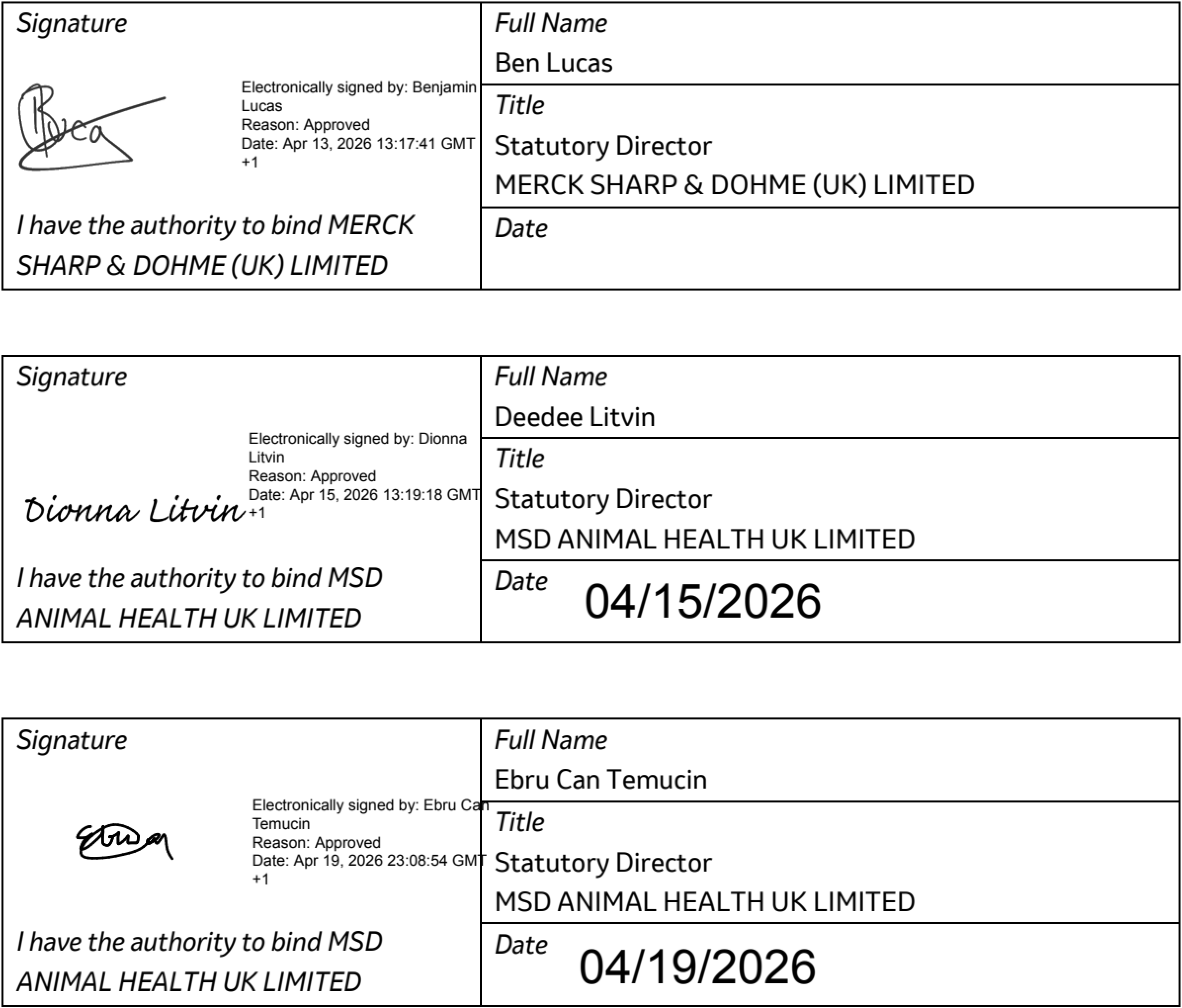
Company directors representing the boards of reporting entities (listed in Appendix I) reviewed and approved this statement prior to publication.
Attestation
In accordance with the requirements of the Act, I attest that I have reviewed the information contained in this report for the entity or entities listed above. Based on my knowledge, and having exercised reasonable diligence, I attest that the information in the report is true, accurate and complete in all material respects for the purposes of the Act, for the reporting year listed above.
Other Relevant Information
As a signatory of the United Nations (UN) Global Compact, we are committed to advancing the 10 principles on human rights, labour, environment and anti-corruption and the UN Sustainable Development Goals (SDG).
We share our progress against the UN SDG targets for Good Health and Wellbeing, Gender Equality, Decent Work and Economic Growth and others in our company’s Impact Report.
Appendix I
In accordance with the Act, the following entities are included in this statement:
MSD ANIMAL HEALTH UK LIMITED – Company Number 00946942
MSD R&D INNOVATION CENTRE LTD – Company Number 00955192
INTERVET UK PRODUCTION LIMITED – Company Number 03200055
MERCK SHARP & DOHME (UK) LIMITED – Company Number 00233687
Appendix II
Key supplier and service provider categories for MSD:
- Active Pharmaceutical Ingredient (API) Suppliers: These suppliers provide active components or substances that provide the therapeutic effects in drugs. They are used for formulation and production of pharmaceutical products.
- Excipient Suppliers: Excipients are the non-active ingredients that are used as fillers, binders, or stabilizers in the formulation of medications. Excipient suppliers provide these materials.
- Raw Material Suppliers: These suppliers provide essential ingredients and raw materials for drug manufacturing, such as sugars, solvents, and various chemicals.
- Packaging Suppliers: Packaging suppliers provide packaging materials and services. They supply items such as bottles, vials, blister packs, labels, and packaging machinery.
- Contract Manufacturing Organizations (CMOs): CMOs specialize in the manufacturing and production of pharmaceutical products. They provide services such as formulation, manufacturing, packaging, and labelling of products.
- Research Organizations: Our research providers include those that provide laboratory supplies and other R&D-related services. We often collaborate with research institutions, academic organizations, and contract research organizations (CROs). These partners contribute to the research and development and clinical trials of new drugs.
- Equipment Suppliers: Suppliers of specialized equipment used in pharmaceutical manufacturing, such as mixing systems, granulators, tablet presses, sterile filling machines, and packaging machinery.
- Quality Control and Testing Providers: These entities offer analytical testing, quality control, and assurance services to ensure that the products meet regulatory requirements and comply with quality standards.
- Logistics and Distribution Providers: We rely on logistics and distribution providers to handle the transportation, storage, and distribution of finished products to various markets and customers.
- Service Providers: These entities provide services such as travel and meetings, facility management, and marketing.
- Capital Expenditure Suppliers: These entities provide goods and services such as engineering and construction.